Welcome to the Department of
Biosciences and Bioengineering

A strong research and teaching program in Biosciences and Bioengineering
nurtured by active collaboration between biologists, medical scientists,
physical scientists and engineers

About Us

The disciplines of Biosciences and Bioengineering infuse our daily lives to an unprecedented degree today. Whether it is the food we eat, the medicines we take, the devices that are used in order to diagnose and treat ailments, or our very understanding of how our own bodies and minds work, Biosciences and Bioengineering give us both insights as well as techniques to ensure greater well-being, for both animal and plant life.

Stemming from our pursuit of knowledge and technology development in the biological and medical sciences, the two sub-domains represented specifically in academic programs in our department are Biotechnology and Biomedical Engineering. We offer an MSc in the former, an MTech in the latter, and PhD in both.

The study of the biological and medical sciences spans multiple scales of size, all the way from atoms to the biosphere, and it is important to ask questions at all these size scales. Imbalances in ecosystems, communities, and populations will be detrimental to all living systems, especially human beings. Due to this immediate impact on our lives, many bioscience or bioengineering departments around the world study the living world at the larger size scales. Many other departments, including the Department of Biosciences and Bioengineering @ IIT Bombay, study biology and animal physiology at the organ, tissue, and cellular levels, allowing us to impact human life by working at the interface of biology and engineering.

Several human-made systems are engineering marvels. Even the most complex of human-made systems, however, comes with a parts list and design manual. Living systems, in contrast, lack parts lists or design manuals. The challenge is to reverse engineer living systems and understand the design principles. Via such processes, not just do we employ engineering techniques to advance biological knowledge and healthcare, we also gain inspiration from biological and medical sciences to develop better engineering systems.

Owing to their complexity, living systems can be viewed as “black boxes”. As such, one can study biological and medical sciences for the intellectual challenge they offer. Due to the inherent applicability of biosciences and bioengineering to our lives, one can also develop applications to benefit human health and welfare, provide food security, offer solutions for sustainable living, and the like.

The Department of Biosciences and Bioengineering (BSBE) consists of two research groups: the Biosciences and Engineering (BSE) group and the Medical Engineering (MedEngg) group:
Research groups

BioSciences & Engineering (BSE) Group

The BioSciences & Engineering (BSE) Group integrates research across biosciences and bioengineering disciplines for a comprehensive understanding of living systems with a goal to translate discoveries into impactful environmental and healthcare technologies.

Our Biosciences research spans fundamental and applied studies across cellular, viral, bacterial, fungal, plant and animal model systems. Our faculty undertake collaborative research in genetics and genomics, microbiology and infection biology, immunology and cancer, proteomics and metabolism. These efforts aim to foster and encourage pursuits of fundamental discoveries and where appropriate, apply the discoveries to address challenges in healthcare, agriculture and environment.

Our Bioengineering research emphasizes translational efforts to healthcare and medicine through quantitative, computational, and engineering approaches. Faculty undertake research in biophysics, computational biology, biomaterials and tissue engineering, biosensors, nanobiotechnology, medical devices and instrumentation, AI/ML in healthcare, and neural engineering.

Collectively, the BSE Group fosters an interdisciplinary and collaborative environment that bridges discovery-driven science with innovative applications in biotechnology and healthcare.

Medical Engineering (MedEngg) group

The Medical Engineering (MedEngg) Group takes a systems-level engineering approach to understand the functioning of the human body and develops technology and devices to assess, treat, and enhance human functioning. While bioengineering as a field generally involves applications of engineering principles to biological phenomena, the MedEngg Group focuses principally on human physiological functioning, addressing the organ, systems, and whole-body levels in health and disease. Towards this, we pursue a rigorous engineering-driven ground-up approach to fundamental research directed at obtaining a quantitative understanding of a) human physiological functioning at the organ-level upwards and b) how engineered systems (such as ultrasound, lasers, and electrical stimulators) interact with and impact the human body. The group’s fundamental research pursuit is further complemented by its translational efforts employing a deep-tech approach to the development of novel protocols, technology, and devices. 

The MedEngg group’s research presently spans four thematic areas: i) Medical Instrumentation and Imaging; ii) Medical Signal and Image Processing; iii) Neuroengineering and Rehabilitation Engineering; and iv) Computational Modeling of Physiological Systems. These four verticals complement and naturally feed into each other, resulting in creation of new knowledge and the development of innovative protocols, devices, and technologies such as non-invasive imaging systems, surgical instrumentation, IoT and wearables for healthcare monitoring, non-invasive medical sensors, electrophysiological systems (EEG, ECG, EMG, non-invasive brain stimulation systems), biomechanical systems (cardiovascular and musculoskeletal biomechanics), assistive technology, orthotics, prosthetics, exoskeletons, rehabilitation robotics, cognitive systems, engineering-informed data-driven clinical decision-making models, and protocols for space rehabilitation.

In order to realize the above objectives, we bring together and train Engineers (e.g., Biomedical, Electrical, Instrumentation, Mechanical, Civil, and Computer engineers), Physicists, Mathematicians, Data-scientists, Neuroscientists, Physiologists, and Clinicians (e.g., Physicians, Physiotherapists, Psychologists, Pharmacologists). The group’s vision of advancing core medical engineering knowledge and its translational efforts are aimed at impacting and enhancing the full spectrum of human well-being and engagement across various domains, in addition to health and disease, such as aging and longevity, disability, sports, and functioning in extreme environments such as defence and space applications.
Faculty Recruitment

We invite applications for faculty positions from Indian and Foreign Nationals in the following areas:

  • Medical Instrumentation
  • Medical Signal & Medical Image Processing
  • Physiological Systems Modelling
  • Data Science for Biomedical Engineering
  • Development of Microscopy Tools and Systems
  • Vertebrate Animal Biology (Development, Neurobiology, Regeneration, Aging, Disease models etc.).
  • Genomics / Lipidomics / Metabolomics
  • Synthetic Biology
  • Plant Biology
  • Single Molecule Techniques
  • Bioinformatics
  • Cell & Gene Therapy

For further information on advertisement, areas of specialization, and eligibility criteria click here

Achievements and recognitions

Awards

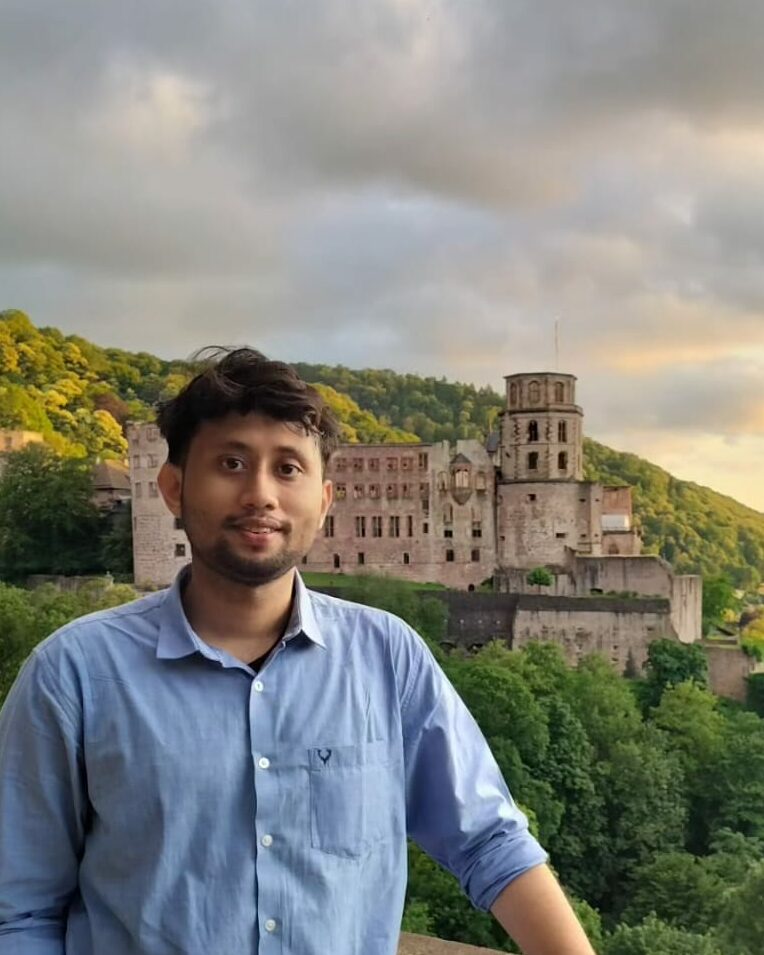
Sourav Ghosh

Sourav Ghosh, a senior graduate student from Prof. A Banerjee’s Lab, is proud recipient of the 2025 Angelika Amon Young Scientist award. This award is given every year to up to two graduate students in the life sciences or biomedical research from institutions outside the United States. It recognizes the excellence in research and enthusiasm for basic science that was embodied by Dr. Amon, who was a pioneering geneticist and cell biologist.

Sourav will be visiting the MIT Koch Institute to receive the award, deliver a scientific talk and meet with MIT faculty spanning few days. His travel and accommodations will be covered by the Angelika Amon foundation.

previous arrow
next arrow
1

Faculty

1 +

Students

1 +

Postdocs

1

Publications
(in 2024)