We innovate optical and ultrasound imaging systems and reconstruction algorithms tailored for preclinical to the clinic settings.
What is optoacoustic / photoacoustic imaging?
Optoacoustic / photoacoustic imaging (OAI/PAI) is an emerging hybrid biomedical imaging technique that combines light and sound to render optical-absorption contrast at high ultrasonic spatial resolution. Pulsed laser light illuminates tissue; chromophores such as haemoglobin, melanin and water absorb the energy, heat up, expand, and emit pressure waves captured by ultrasound transducers. It supports molecular imaging, breast cancer detection, brain imaging, sentinel lymph node mapping, vasculature visualisation and more.
Spiral volumetric optoacoustic tomography (SVOT)
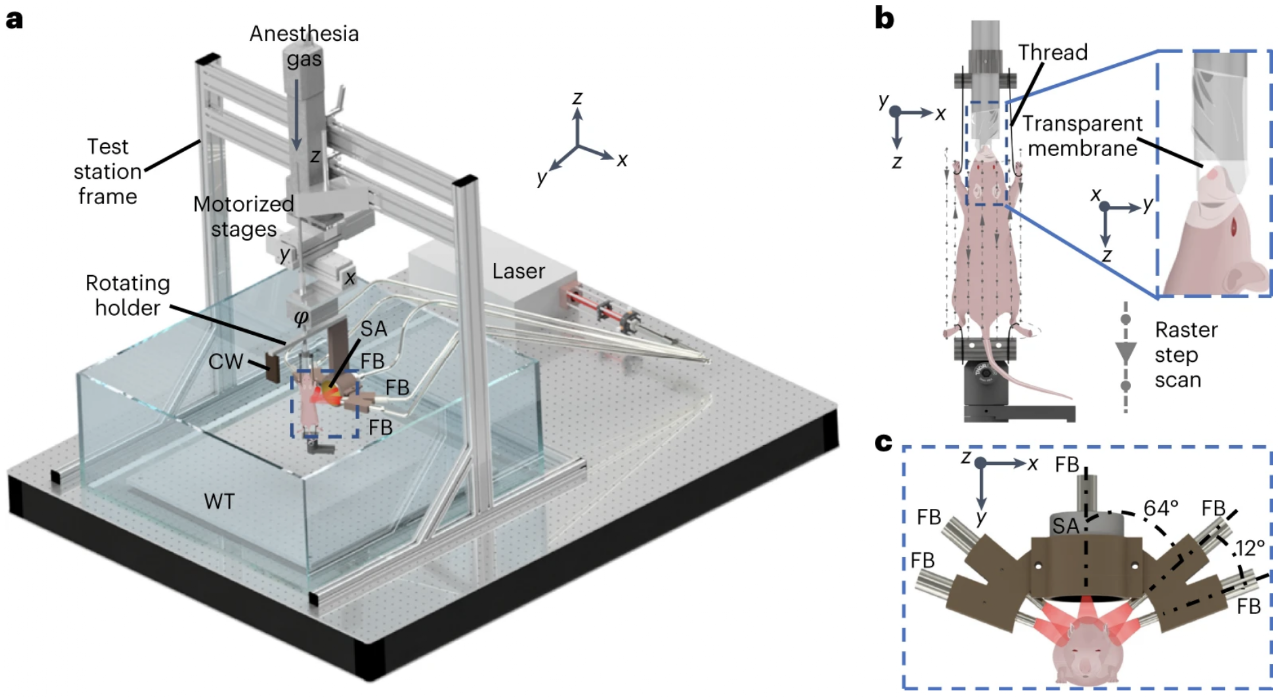
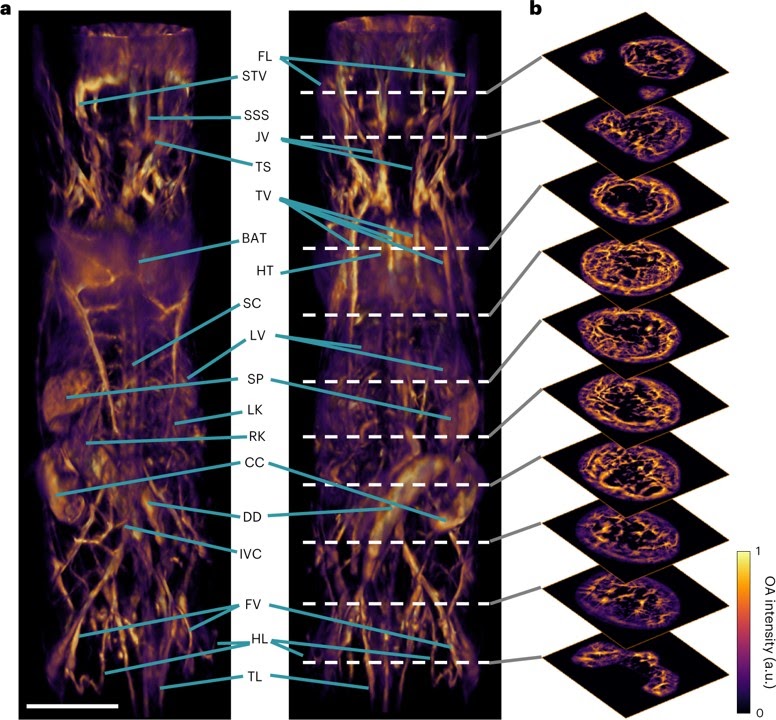
Existing whole-body preclinical systems are limited in contrast, sensitivity and resolution. We developed SVOT, which rapidly scans a mouse with spherical arrays to deliver optical contrast at high spatial and temporal resolution, visualising deep structures in living tissue in the near-infrared window with rich spectroscopic contrast. More details: Kalva et al., Photonics Research 9(6) 2021; Photoacoustics 30 2023; Nature Protocols 18 2023.
Rapid volumetric tracking of nanoagent kinetics
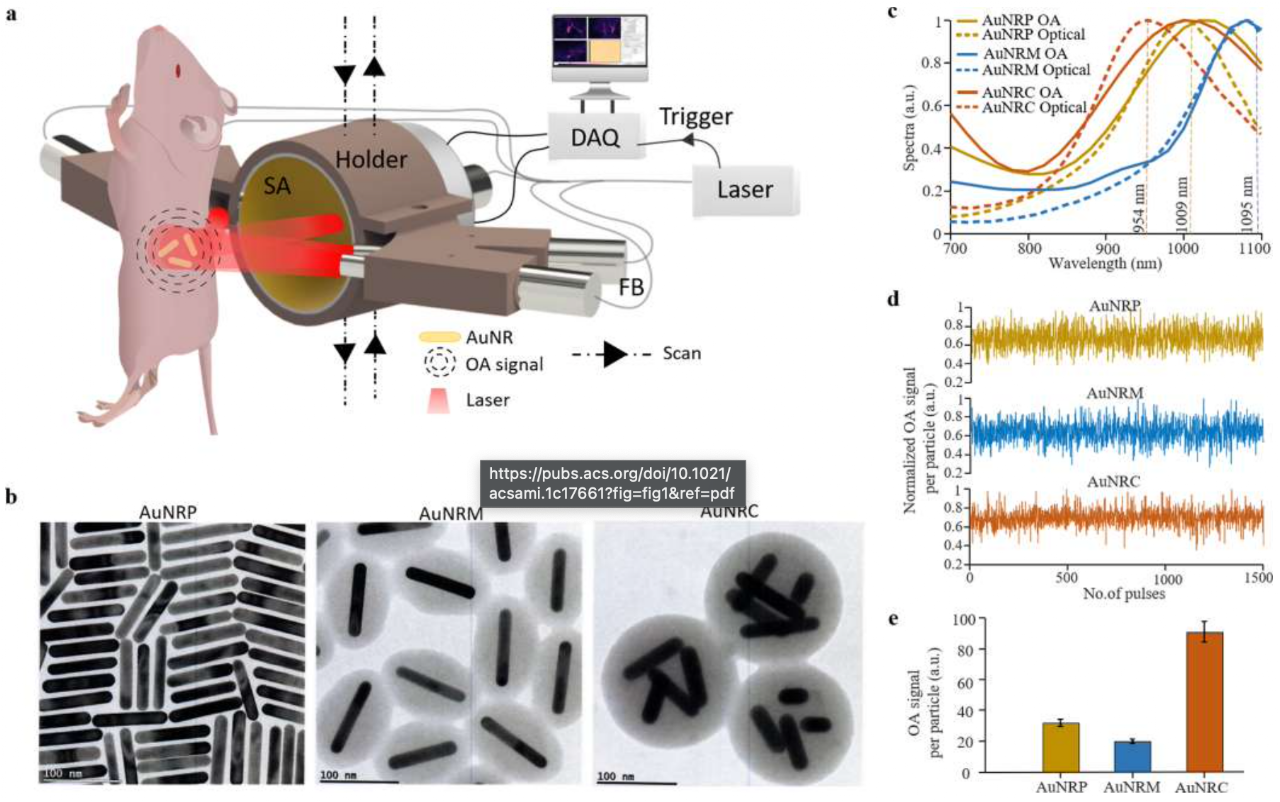
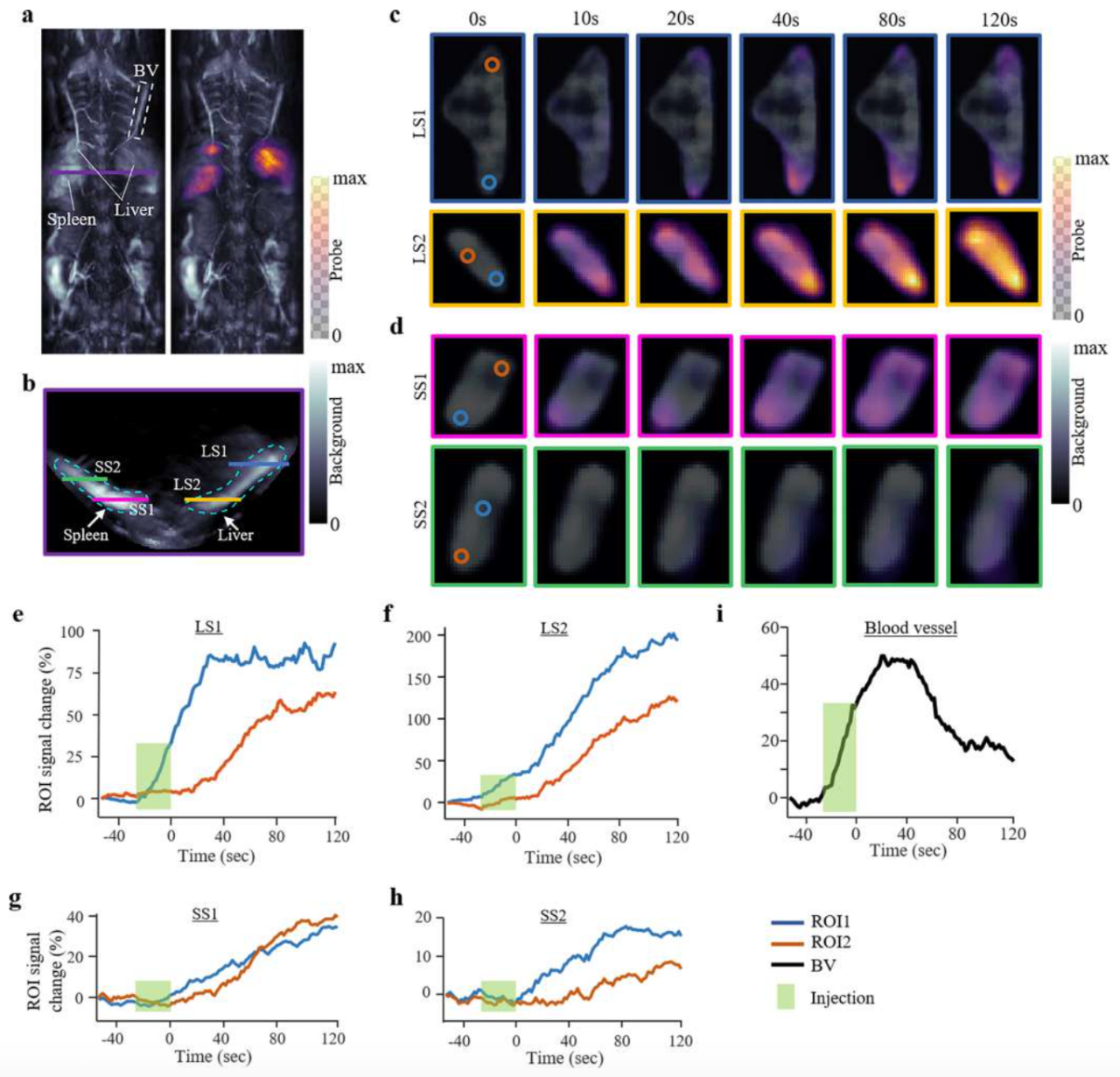
Large-scale visualisation of nanoparticle kinetics is crucial for optimising drug delivery and assessing in-vivo toxicity. Using single-sweep volumetric optoacoustic tomography (sSVOT) we tracked gold nanoagent kinetics and biodistribution in mice at sub-organ level, at 130 μm resolution and sub-picomolar sensitivity, observing clearance dynamics and accumulation in the liver and spleen. More details: Kalva et al., ACS Applied Materials & Interfaces 14(1) 2022.
Reduced oxygen saturation in Parkinson's disease models
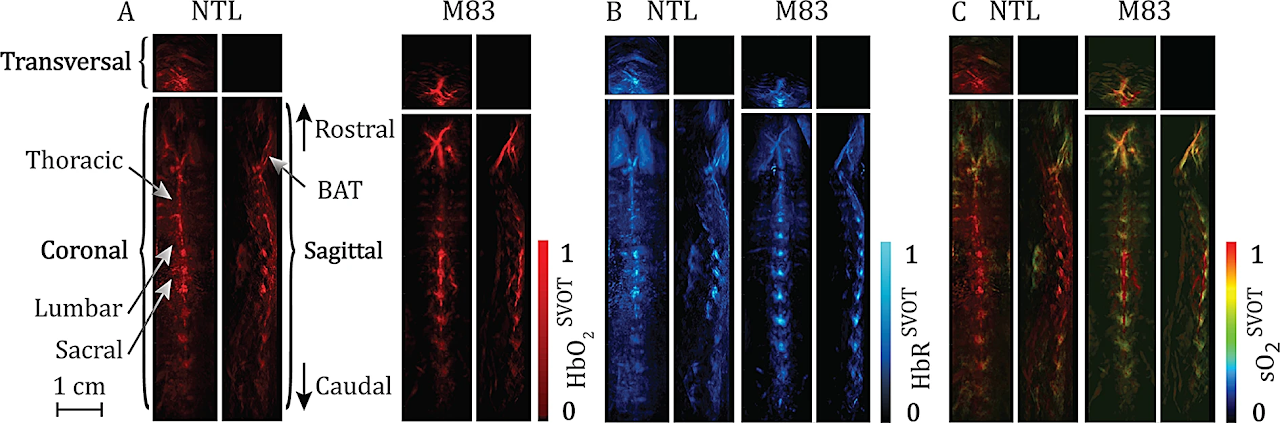
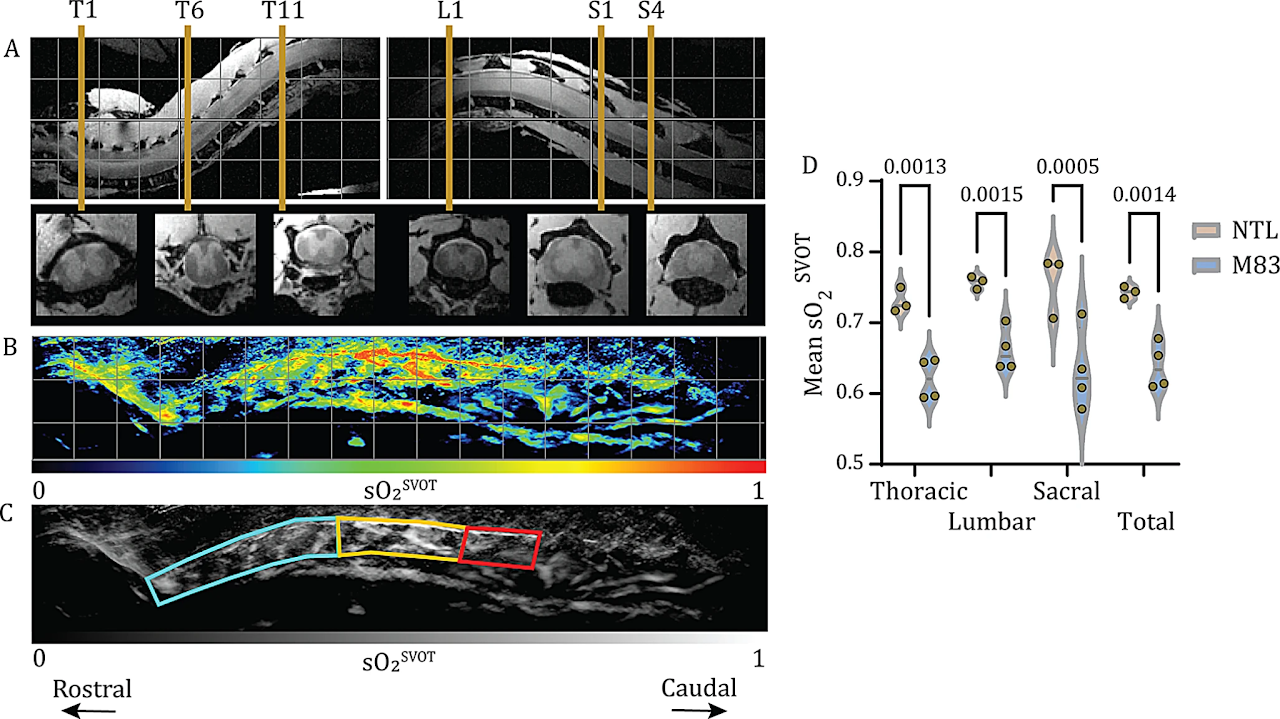
Metabolism and bioenergetics play important roles in Parkinson’s disease (PD). Using a multimodal approach, in-vivo SVOT assessed oxygen saturation in the spinal cord of the transgenic M83 PD model versus non-transgenic littermates, complemented by ex-vivo 9.4T MRI and deep-learning segmentation for quantification. More details: Combes et al., EJNMMI 2024.
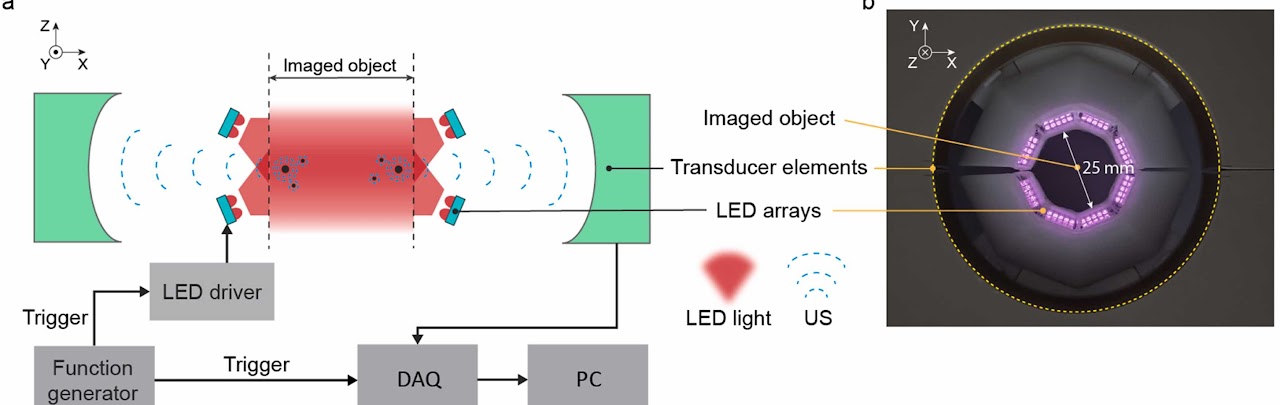
Solid-state lasers are bulky and costly. LEDs offer an economical, portable alternative with excellent pulse-to-pulse stability. Our FLOAT system drives a stacked LED array at a 100 ns pulse width and stable 0.48 mJ per pulse, integrating illumination into a circular array of cylindrically focused detectors to overcome limited-view effects and improve cross-sectional image quality. More details: X. Liu, S. K. Kalva et al., Photoacoustics 31 2023.
Second-generation desktop PLD-PAT system
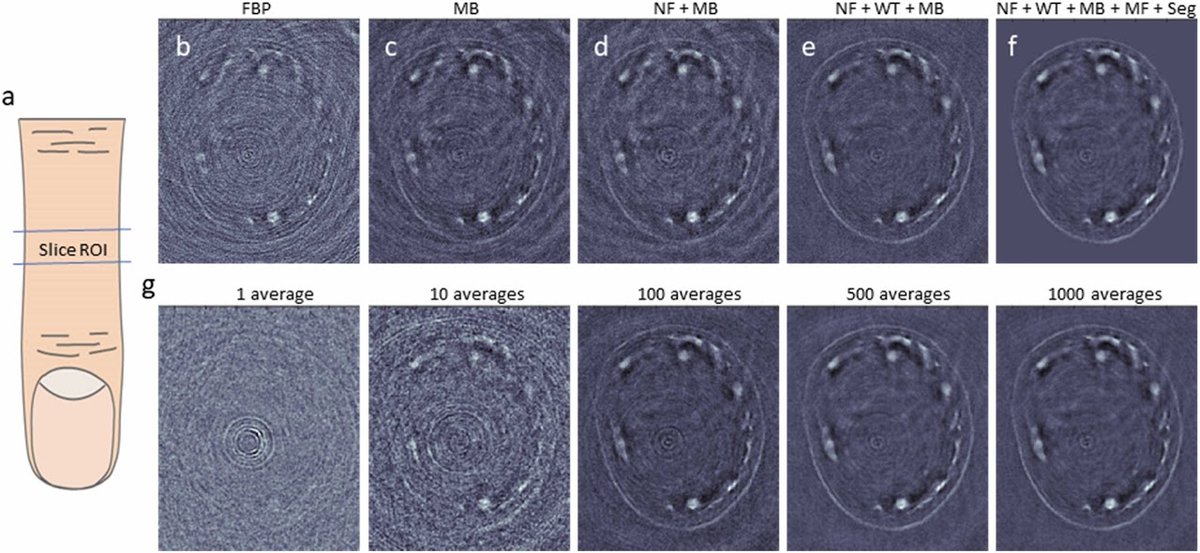
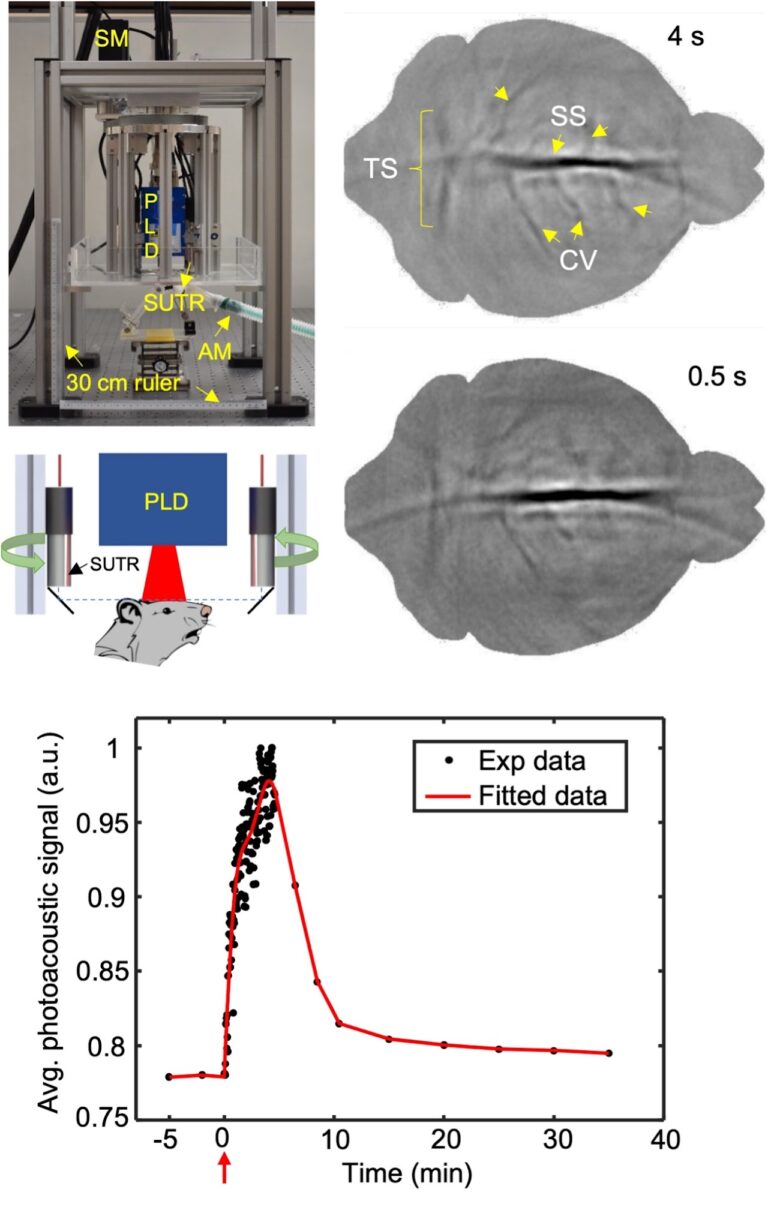
By combining acoustic-reflector single-element transducers with a low-cost pulsed laser diode in a circular scanner, we built a compact, high-speed desktop PLD-PAT-G2 system reaching 0.5 s cross-sectional imaging (2 Hz) without expensive array transducers, with up to 3 cm depth in tissue. More details: Kalva et al., Optics Letters 44 2019; JoVE 147 2019.
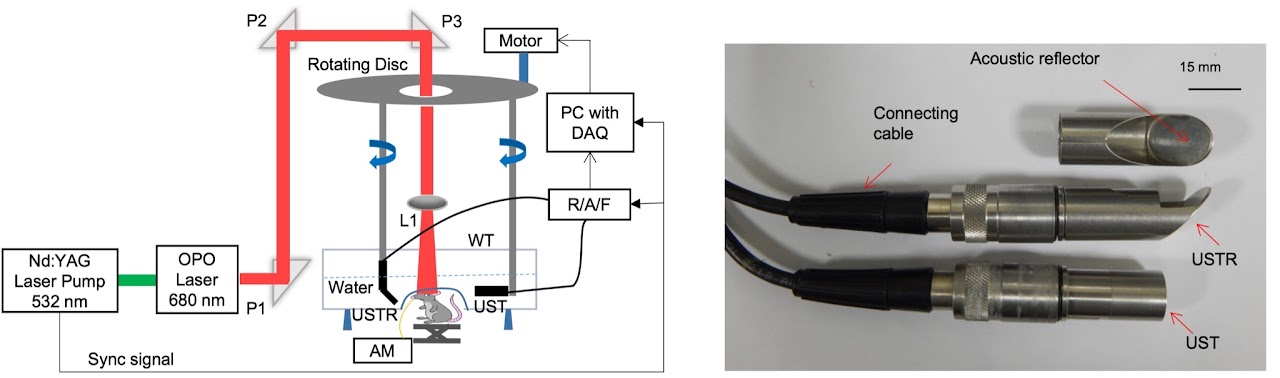
Conventional PAT holds the transducer horizontally and rotates it through 2π, requiring a large water tank and high motor load. We placed the transducer vertically and directed PA waves to it via a 45° stainless-steel acoustic reflector, shrinking the scanning radius, water tank and motor load without affecting spatial resolution or bandwidth. More details: Kalva et al., Journal of Biomedical Optics 22 2017.
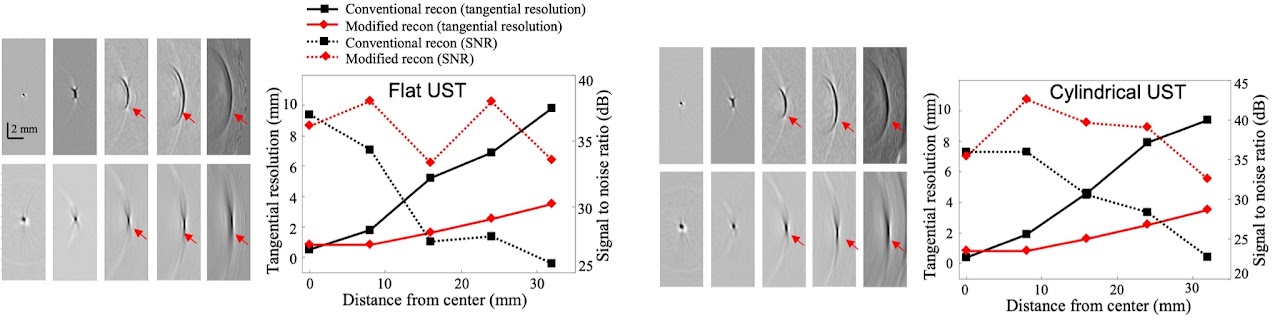
In circular-scan PAT, axial resolution is spatially invariant while tangential resolution varies with position and depends on detector bandwidth and aperture. Using a modified delay-and-sum technique we achieved a three-fold improvement in tangential resolution with flat and cylindrical detectors while preserving target shape and size. More details: Kalva et al., Journal of Biomedical Optics 21 2016.
Research highlights
March 2021 — Our flash scanning volumetric optoacoustic tomography (fSVOT) work was featured on the cover of Laser & Photonics Reviews.
February 2019 — Our pulsed-laser-diode desktop photoacoustic tomography system was featured as a highlight in Biophotonics World.