
Disease Modelling
A Network Based Discrete Dynamic Modeling Framework for Understanding NAFLD Progression
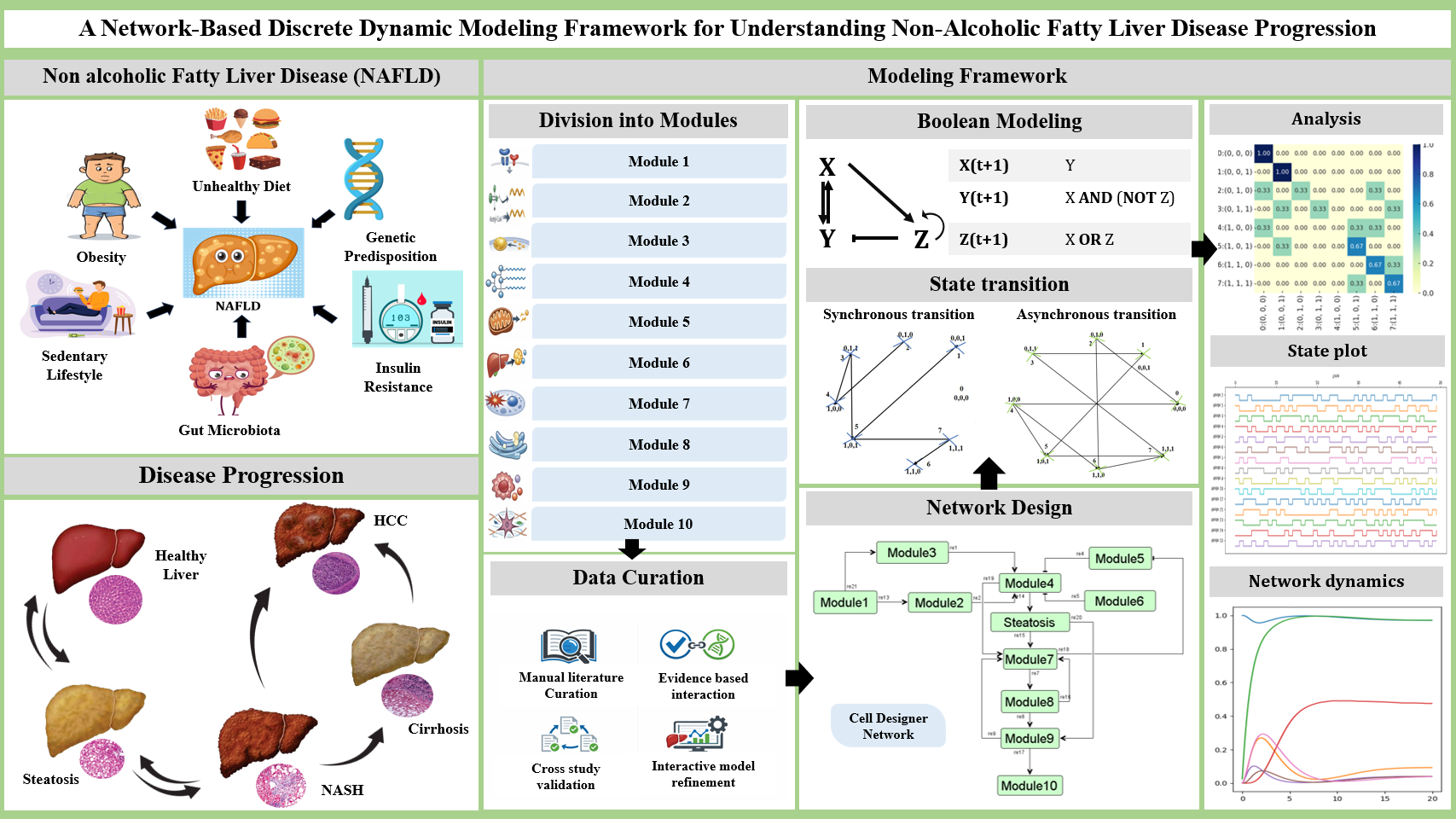
NAFLD is a spectrum of liver diseases ranging from simple steatosis to non-alcoholic steatohepatitis (NASH), fibrosis, cirrhosis, and hepatocellular carcinoma (HCC). It is defined as hepatic fat accumulation in more than 5% of hepatocytes, without significant alcohol intake. NAFLD affects 25–30% of the world’s population, making it a major global health burden. The healthcare and economic impact is significant due to hospitalizations, complications, and long-term management. Therefore, early detection and intervention with lifestyle or therapeutic approaches can prevent disease progression.
The aim of this project is to develop a Boolean model of Non-Alcoholic Fatty Liver Disease (NAFLD) that captures the key molecular and metabolic interactions driving disease progression. A Boolean model of NAFLD simplifies the complex metabolic and signaling networks into logical interactions, making the disease mechanisms easier to study. It helps identify key regulatory nodes driving progression from steatosis to NASH and fibrosis. Such models can predict outcomes of interventions and guide therapeutic strategies where experimental data are limited. This model will help in understanding critical regulatory nodes, simulating disease dynamics, and exploring potential therapeutic targets.
Developing predictive tools for ACLF
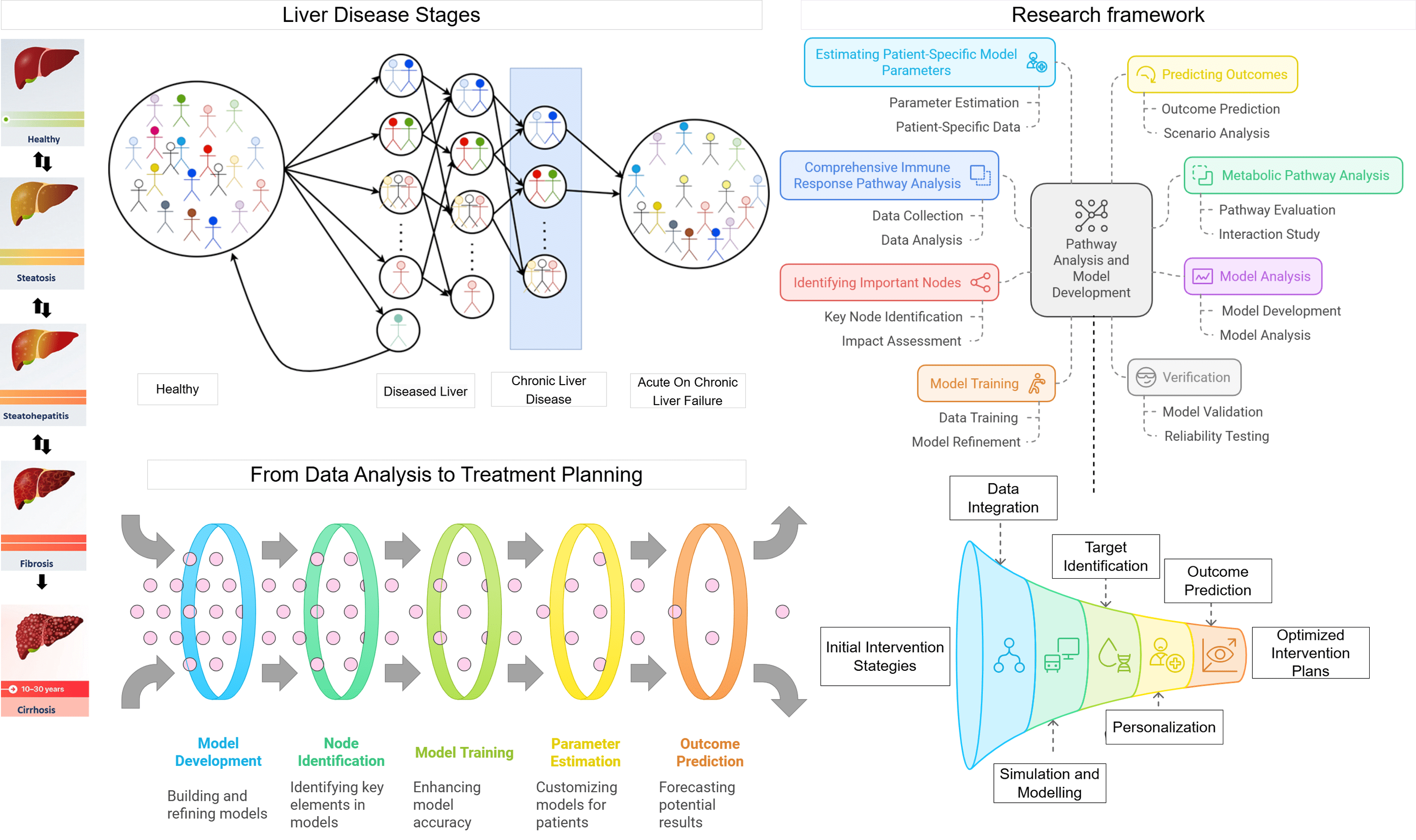
Liver disease is a significant global health challenge characterized by inflammation of liver cells, which can cause various complications. It typically progresses through five reversible stages, emphasizing the need for early intervention. A key concern is ACLF, which can develop gradually but may lead to sudden severe inflammation that worsens liver function, complicating treatment options for clinicians. The unpredictable nature of ACLF necessitates timely intervention to improve patient outcomes.
Our research addresses this gap by developing a comprehensive model integrating immune response and metabolic pathway dynamics to predict the likelihood of individuals with a history of liver disease developing ACLF. We aim to design interventions to prevent severe inflammation associated with ACLF or provide timely treatment strategies to mitigate its effects. This approach enhances our understanding of liver disease progression and provides practical tools for early intervention and improved clinical outcomes.
System Level Modeling of Immune System Network using Boolean Analysis
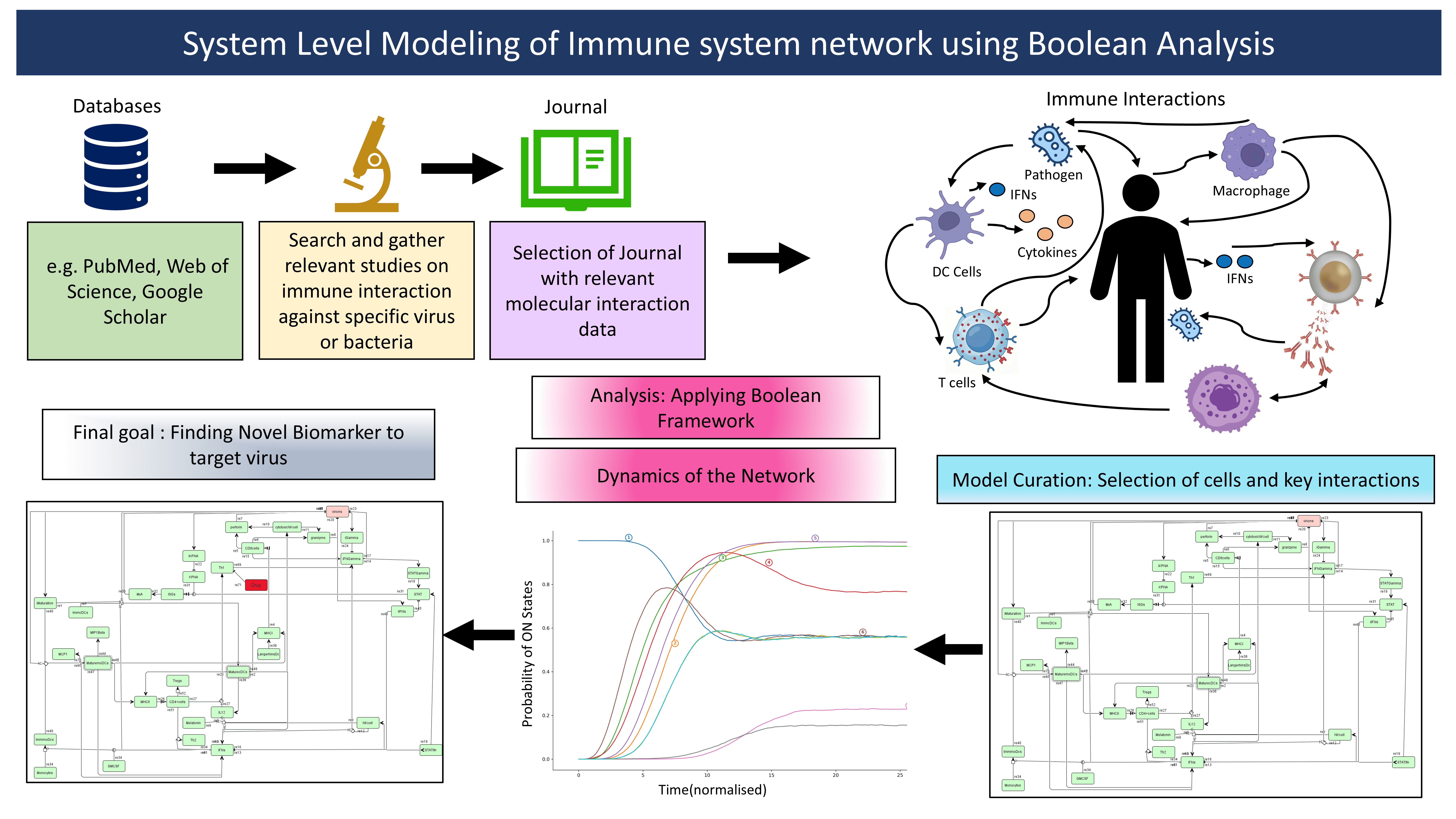
The human immune response network is highly complex and often non-intuitive. Like most biological systems, it is both robust and context-specific. The immune system contains both activators and inhibitors, and the interplay between these components plays a critical role in determining disease outcomes. This interaction is multifaceted, and excessive activation of any component can lead to fatal conditions. Because of this robustness, rather than focusing exclusively on fine-grained molecular interactions, one can examine cell-level interactions to qualitatively assess outcomes in specific scenarios. In this study, we attempted to model the immune response to Ebola virus infection. Ebola is associated with extremely high mortality and is classified as a BSL-4 pathogen. Experimental work with live Ebola virus is therefore extremely dangerous.
Traditional ODE models showed limited success because it is difficult to estimate clinically relevant parameters. Current AI/ML approaches also face challenges: they often lack interpretability, and they require large datasets for realistic training—datasets that are rarely available for Ebola.
We curated an Ebola immune response network at the cellular level based on published literature. In the logical model derived from the network, the state of every node depends on the regulatory signals it receives through incoming edges. Using a Boolean framework, we formulated logical equations for every node in the network. The logical operators (‘AND’ and ‘OR’) were assigned according to biological knowledge: conjunctive regulation was represented by ‘AND’, while redundant or alternative pathways were represented by ‘OR’.
Quantifying the pathogenesis of obesity using comprehensive network models
The World Health Organization (WHO) classifies obesity as a pandemic, affecting a substantial portion of adults and children. One in every ten adults and one in every five children below 18 are said to be obese (Body Mass Index > 30kg/m2). Obesity significantly increases the risk of numerous diseases, including type 2 diabetes (T2DM), and it worsened COVID-19 outcomes.
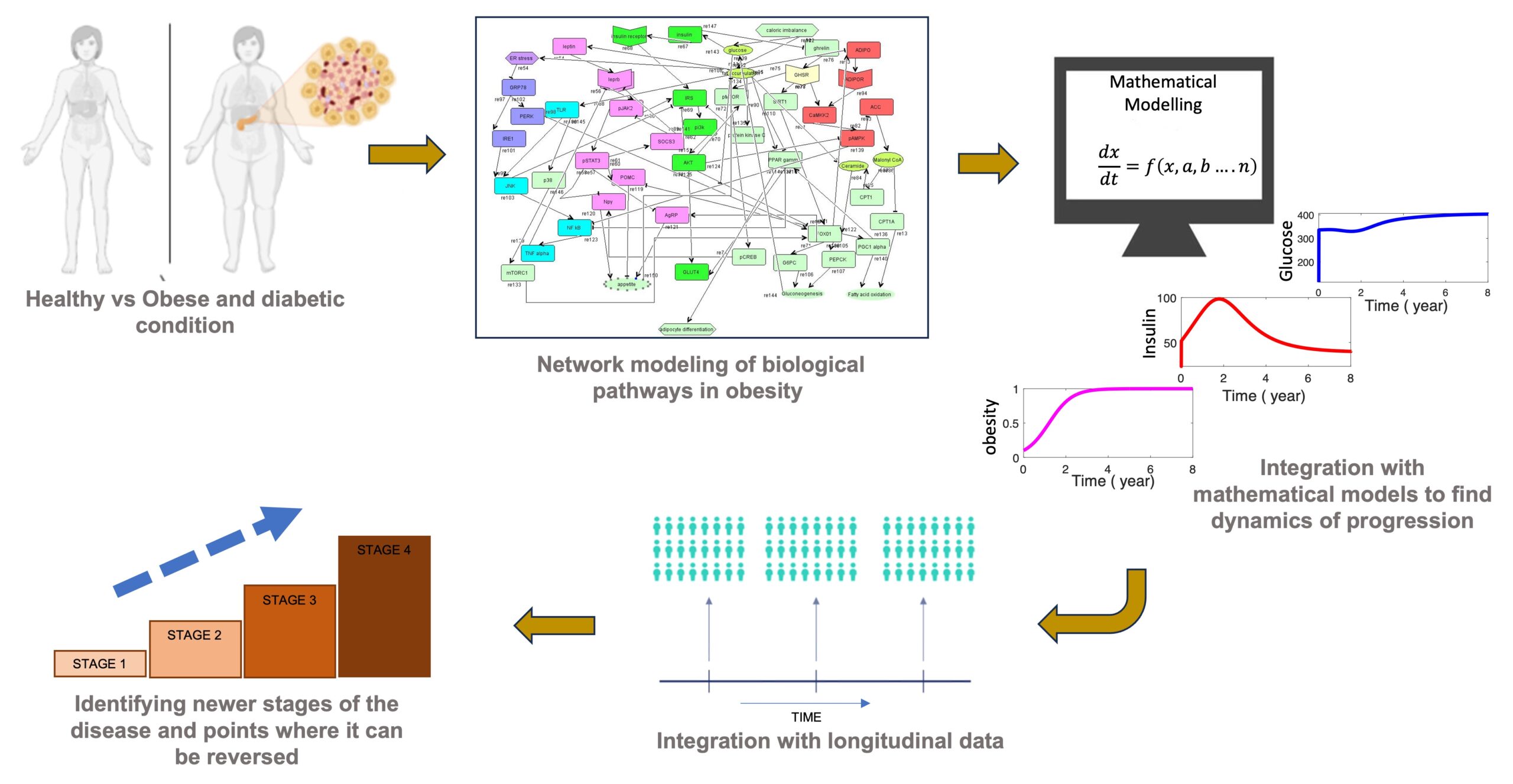
This research will construct Boolean network models of obesity and T2DM biological pathways to identify key molecular interactions driving disease progression. Integrating these Boolean networks with ordinary differential equation models and longitudinal data will provide insights into disease dynamics and multi-factor interactions, surpassing the limitations of experimental data alone. Future research will focus on staging disease progression and identifying points of no return.
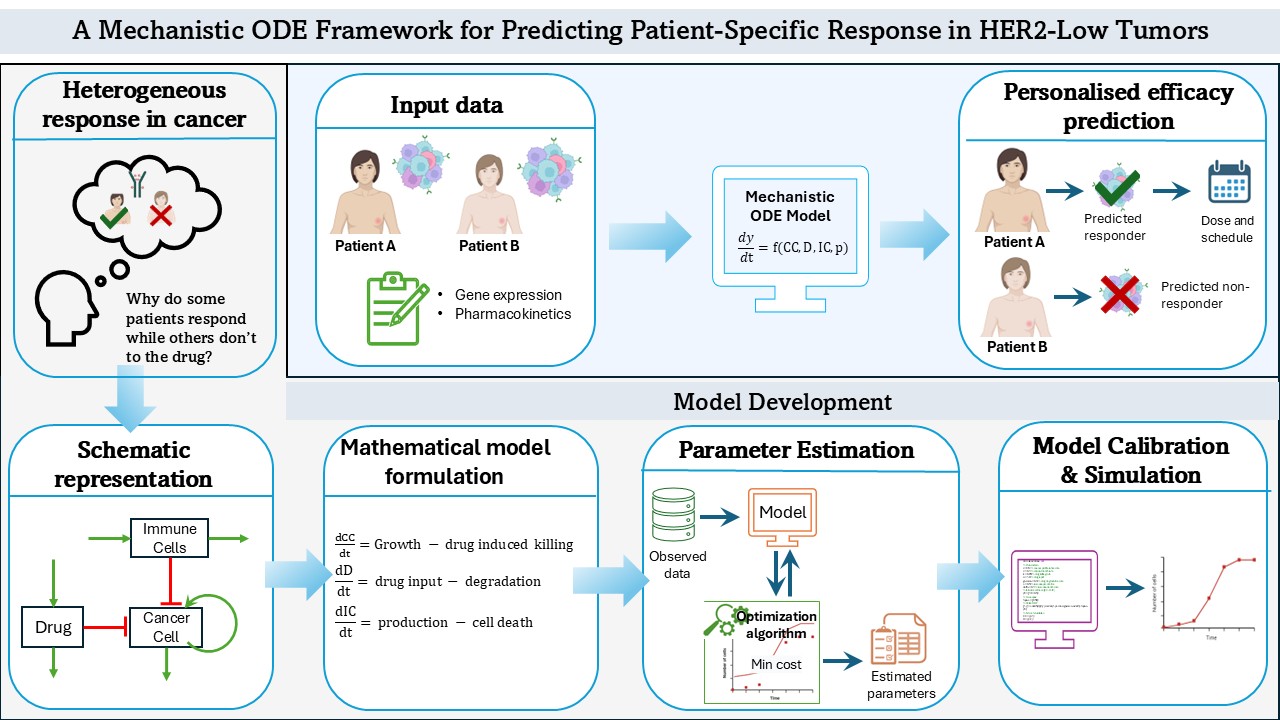
A Mechanistic ODE Framework for Predicting Patient-Specific Responses in HER2-Low Tumors
Breast cancer is a leading cause of cancer mortality in women worldwide, and treatment outcomes depend heavily on tumor subtype. Trastuzumab Deruxtecan (T-DXd) is an antibody-
drug conjugate designed to selectively deliver a potent Topoisomerase 1 inhibitor which act as a chemotherapy agent, to HER2-positive cancer cells. T-DXd has also proven to be efficacious even for HER2-low cancers, but the efficacy varies.
We are developing an ODE-based mechanistic model that captures the distinct cellular interactions of T-DXd in HER2-low tumors. By integrating patient-specific data into the model, we aim to predict whether the therapy will be effective for an individual patient. For patients predicted to respond, the model further estimates the optimal drug dosage required to achieve the desired therapeutic outcome.
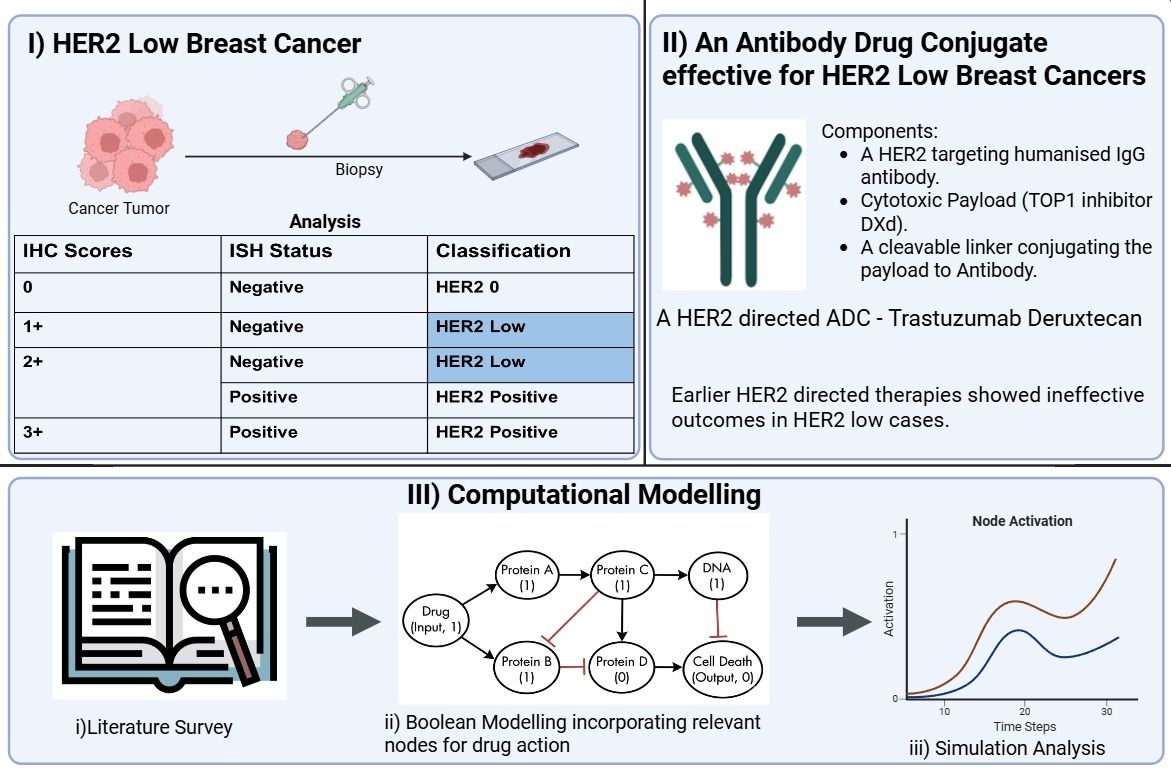
Understanding T-DXd Mechanisms of Action against HER2-Low Breast Cancer using Computational Methods
HER2 Low Breast Cancer represents a broad category of cancers with a lower HER2 expression (IHC 1+/2+) as compared to HER2 positive cancers. This also poses a challenge where traditional HER2 targeting therapies become ineffective in targeting low levels of HER2 receptors. Trastuzumab deruxtecan (T-DXd), another HER2 targeting Antibody-Drug Conjugate has shown potential efficacy against HER2 low cancers as well as HER2 positive cases.
This work involves constructing and analysing network-based models to understand how various mechanism of action of an Antibody Drug Conjugate (ADC), TDXd, interact with differing scenarios of HER2 receptor expression and how these alterations ultimately affect outcomes such as Survival, Apoptosis and Proliferation. The project also aims to explore potential regulatory points which may affect therapeutic outcomes.
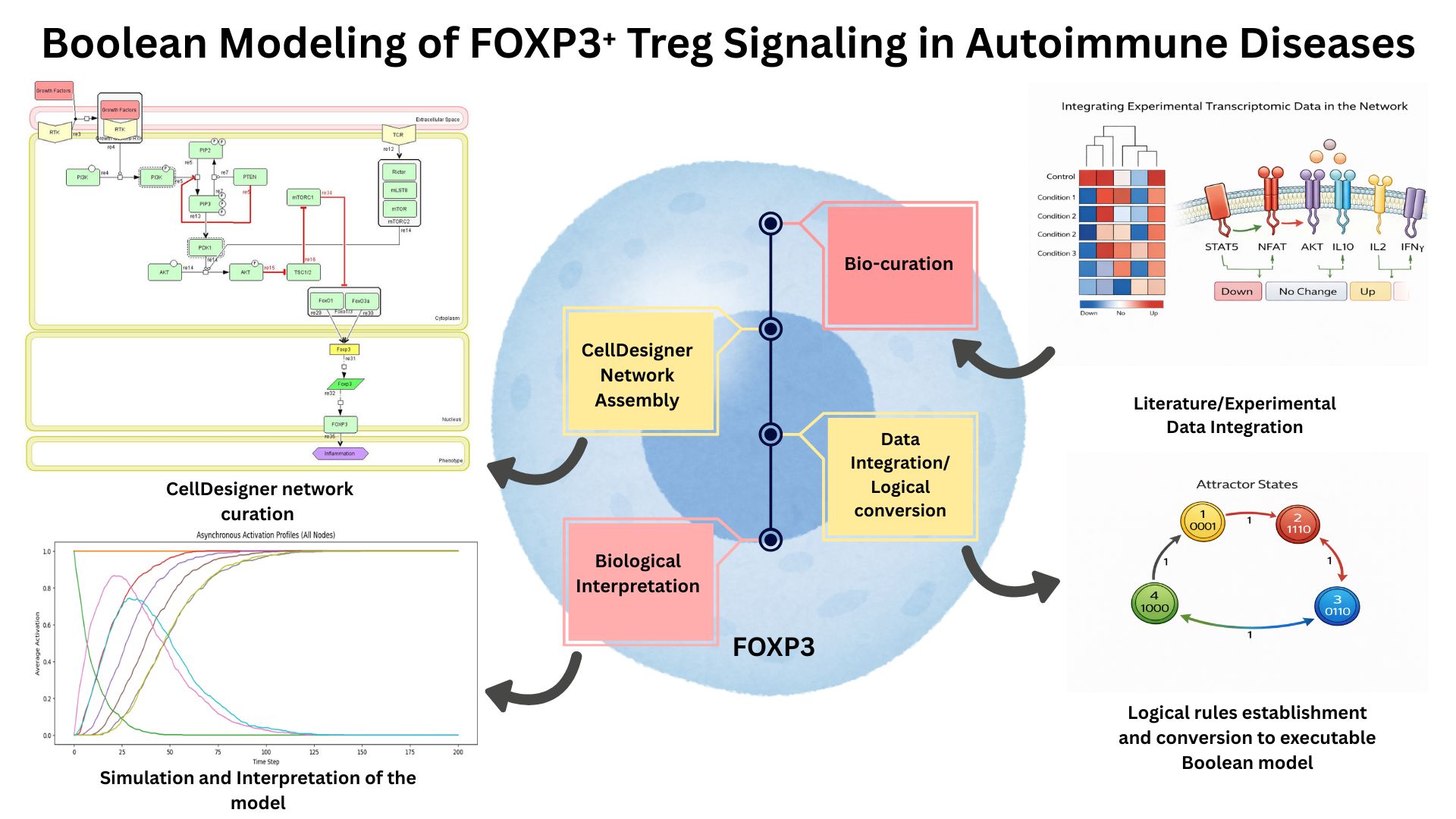
Boolean Modeling of FOXP3+ Treg Signaling in Autoimmune Diseases
The immune system relies on a fine balance between defence and self-tolerance, the breakdown of which drives autoimmune diseases. Regulatory T (Treg) cells, controlled by FOXP3, are central to maintaining this balance, yet their instability under inflammatory conditions can fuel disease progression.
This project develops a Boolean model of FOXP3⁺ Treg cells, integrating cytokine signalling, transcriptional, epigenetic, and metabolic regulation to capture the system’s complexity. By providing a systems-level view of Treg plasticity, the model identifies key regulatory nodes and offers a predictive framework for targeted therapeutic strategies in autoimmune diseases.